Terraboost Media · CRM Architecture Rebuild

$200/Meeting
vs. $12.
A decade of HubSpot workflow sprawl was hiding a 20x cost-per-meeting gap between channels. The fix rewrote the ad strategy overnight.
20x
Cost-per-meeting gap surfaced
16 → 2
Workflows per lead source
8 weeks
Full rebuild end-to-end
$0
Migration cost
02 — The short version
The story in 30 seconds.
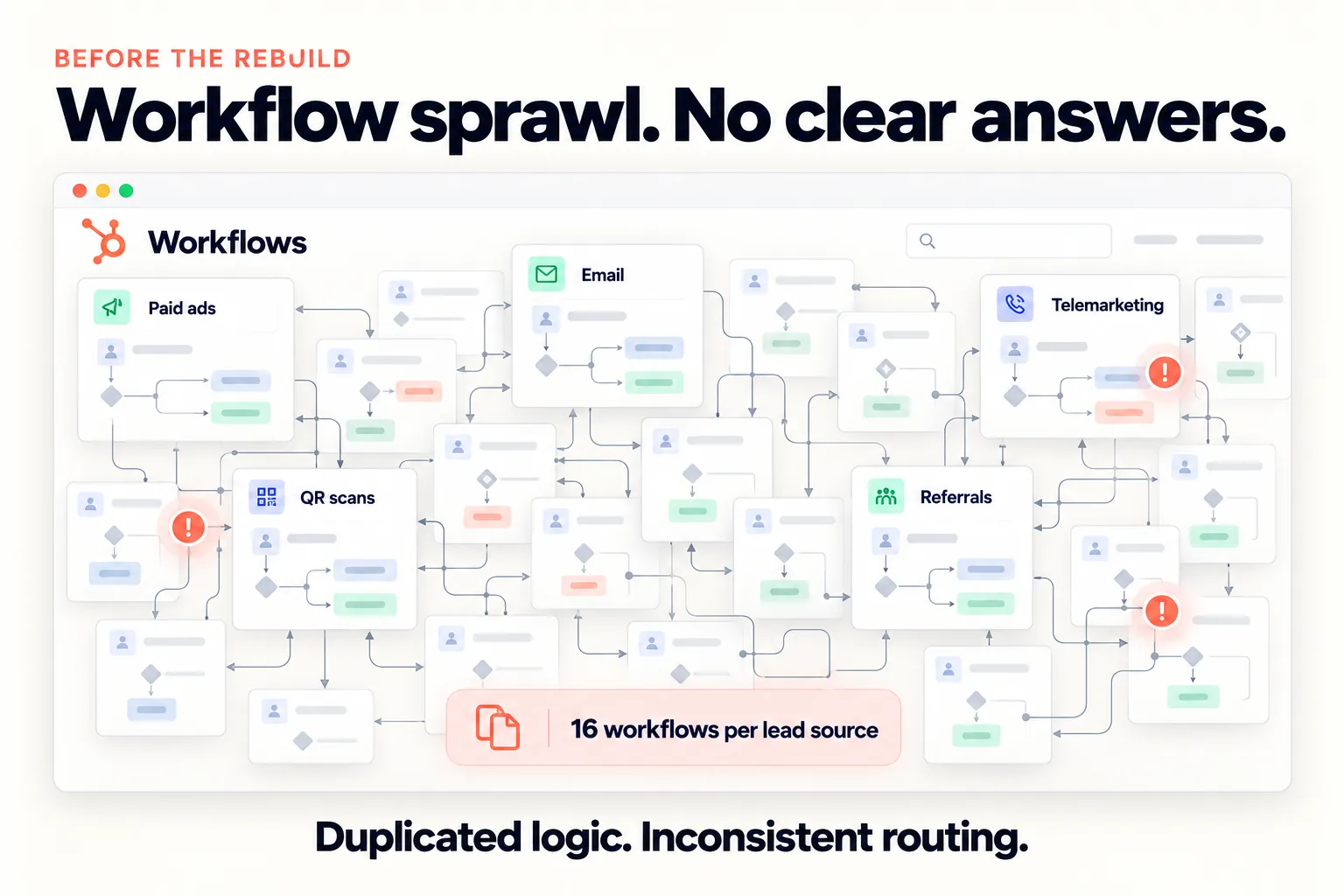
The problem. A decade of organic CRM growth had produced 16 workflows per lead source, stolen-lead rep conflicts, and zero trustworthy channel attribution. Leadership was chasing a $5M revenue plan without knowing which channels were profitable.
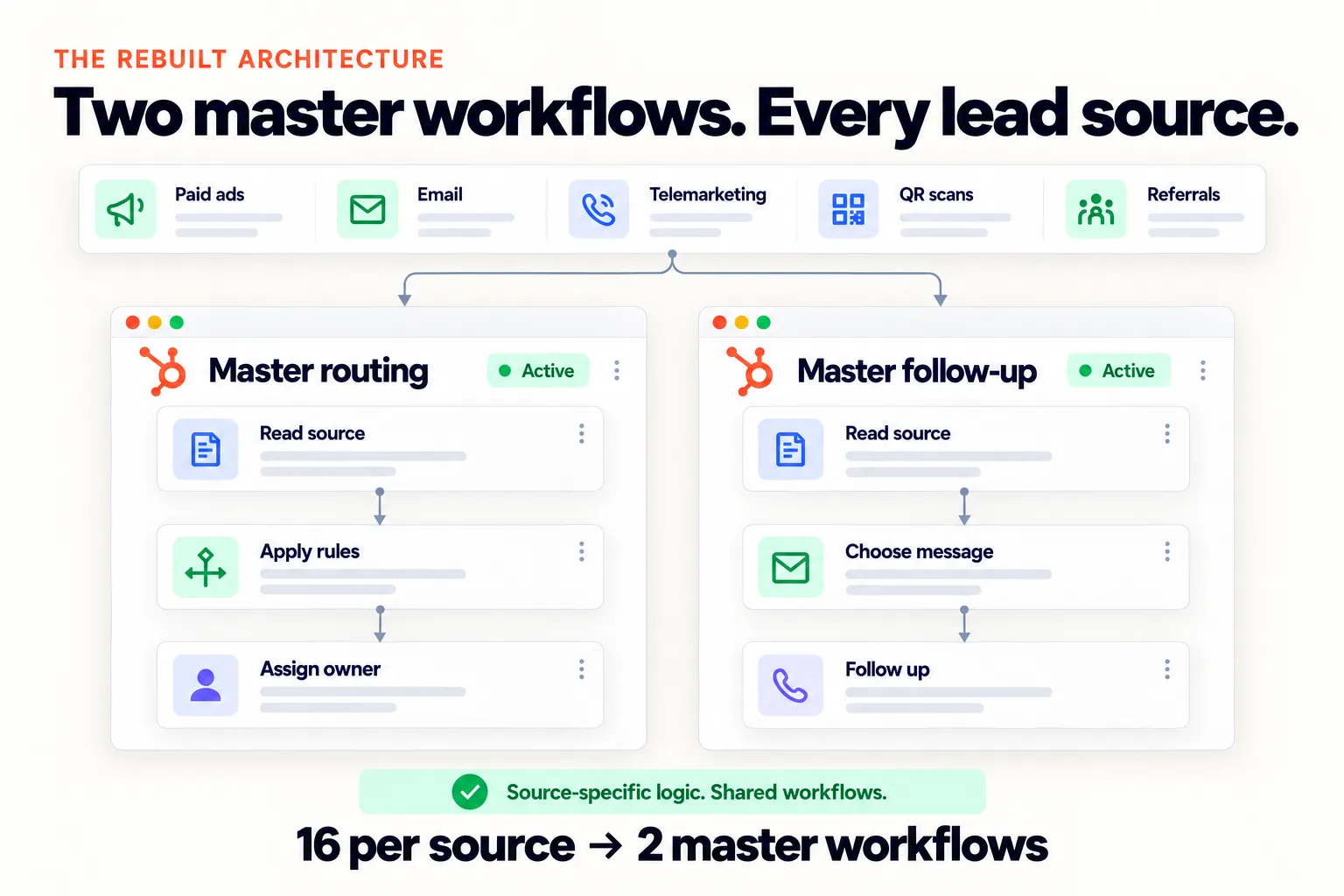
What changed. 16 workflows per source collapsed into 2 master workflows. Shared booking links replaced with personal rep links. Channel attribution rebuilt from scratch inside HubSpot, no migration required.
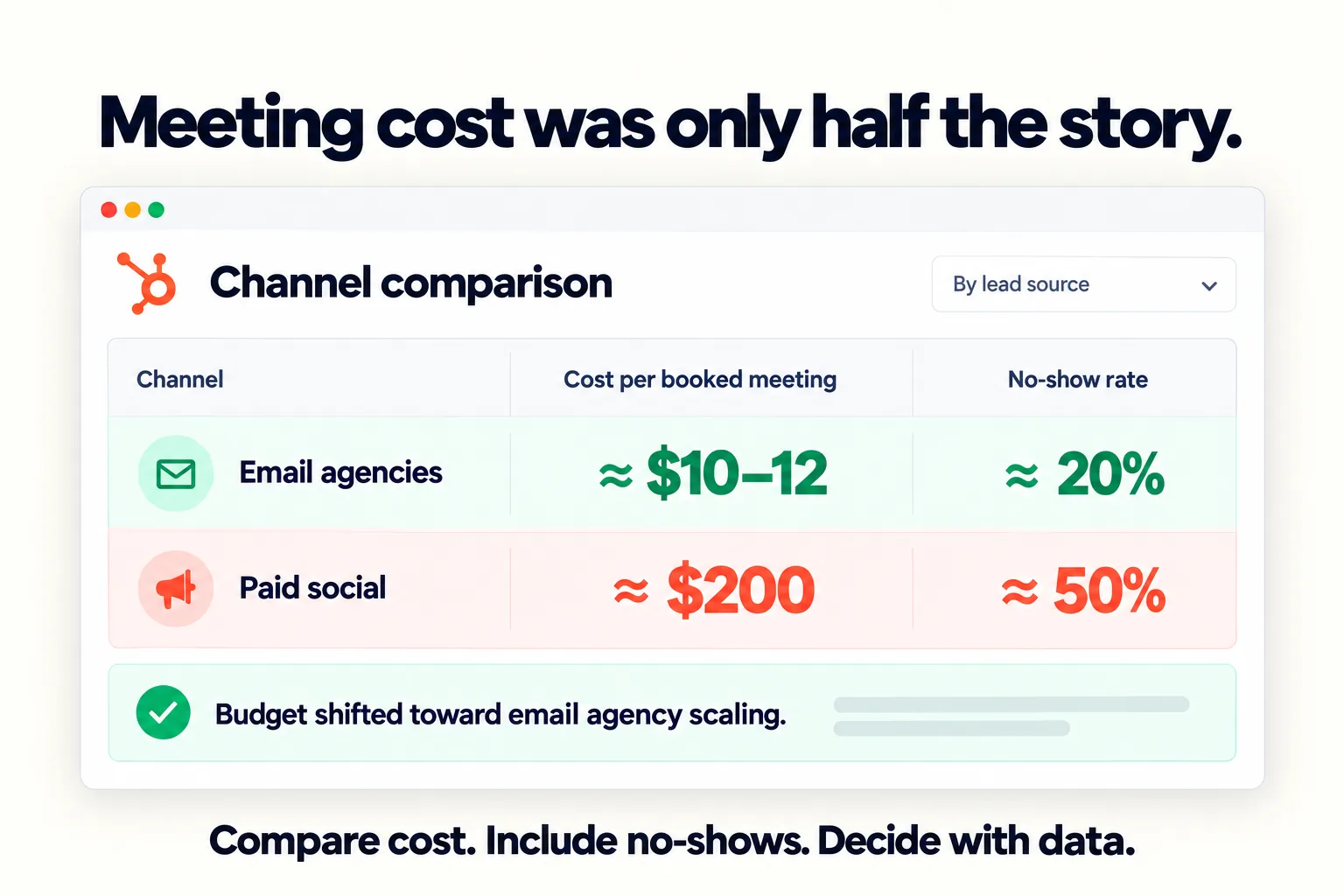
The result. A 20x cost-per-meeting gap surfaced: email at ~$12/meeting vs. paid social at ~$200/meeting. Ad budget rewired. $5M revenue plan now tied to real numbers instead of aspiration.
Time to value. First master workflow live in 3 weeks. Full attribution rebuild in 8 weeks. Zero CRM migration cost.
03 — The problem
16
Workflows.
Zero
Answers.
Terraboost runs a national outdoor media business. Leads come from Meta and Google paid social, email agencies, telemarketing teams, QR-code scans at physical locations, and a scattered set of referral sources. The CRM had grown with the business, which is another way of saying it had never been consolidated.
Every new lead source had spawned its own workflows. By the time we arrived, there were roughly 16 workflows per lead source. Reps didn't trust the CRM because the CRM didn't behave consistently. Shared booking links meant the most aggressive rep captured every inbound. Escalations to sales leadership were happening weekly.
Meanwhile, leadership was being pushed toward a $5M revenue plan. Nobody could defend the number because nobody could tell which channels were actually generating profitable meetings. The answer was buried under a decade of workflow sprawl that nobody wanted to touch.
Every consultant told them to migrate. That would have been the most expensive mistake on the table.
04 — What we actually did
Three
Moves.
01
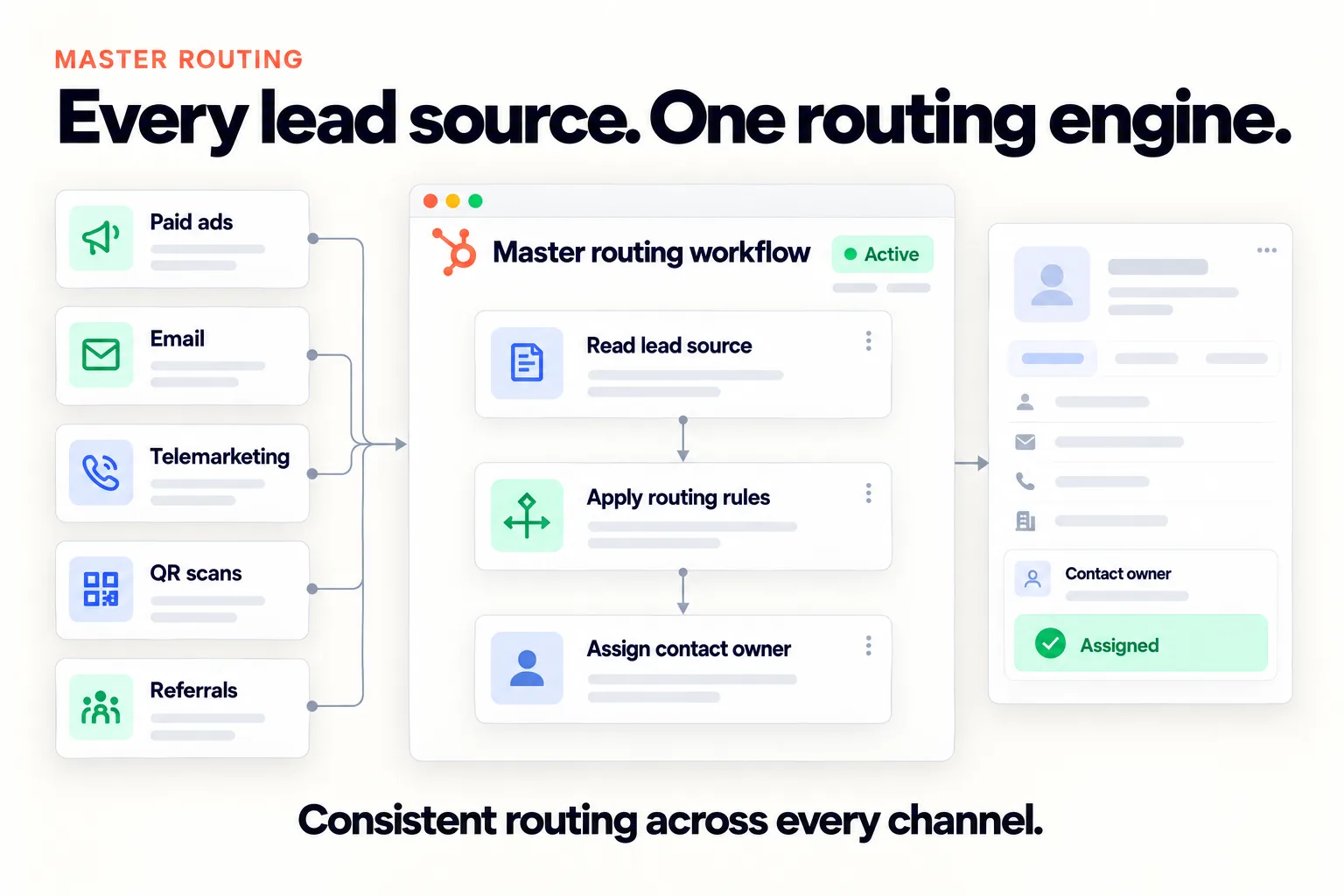
Collapsed 16 workflows per source into 2 master workflows.
Every lead-source-specific workflow was replicating the same two operations: route the lead to the right rep and follow up with the right message. The source-specific logic could be handled through conditional properties, not separate workflow trees.
One master routing workflow. One master follow-up workflow. Every lead source feeds those two engines. Reps stopped second-guessing the CRM because the CRM finally behaved consistently.
02
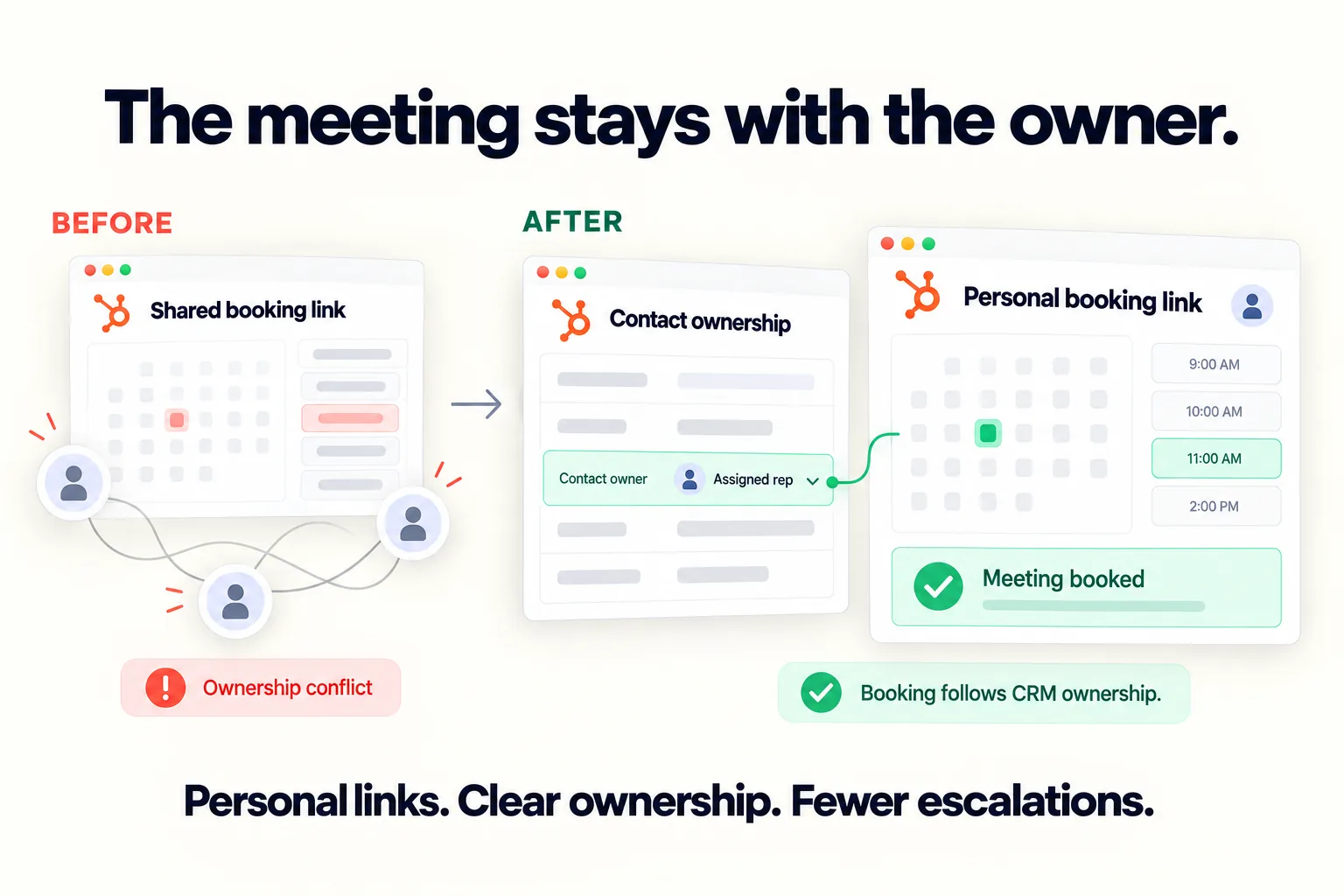
Ended the stolen-lead problem at the root.
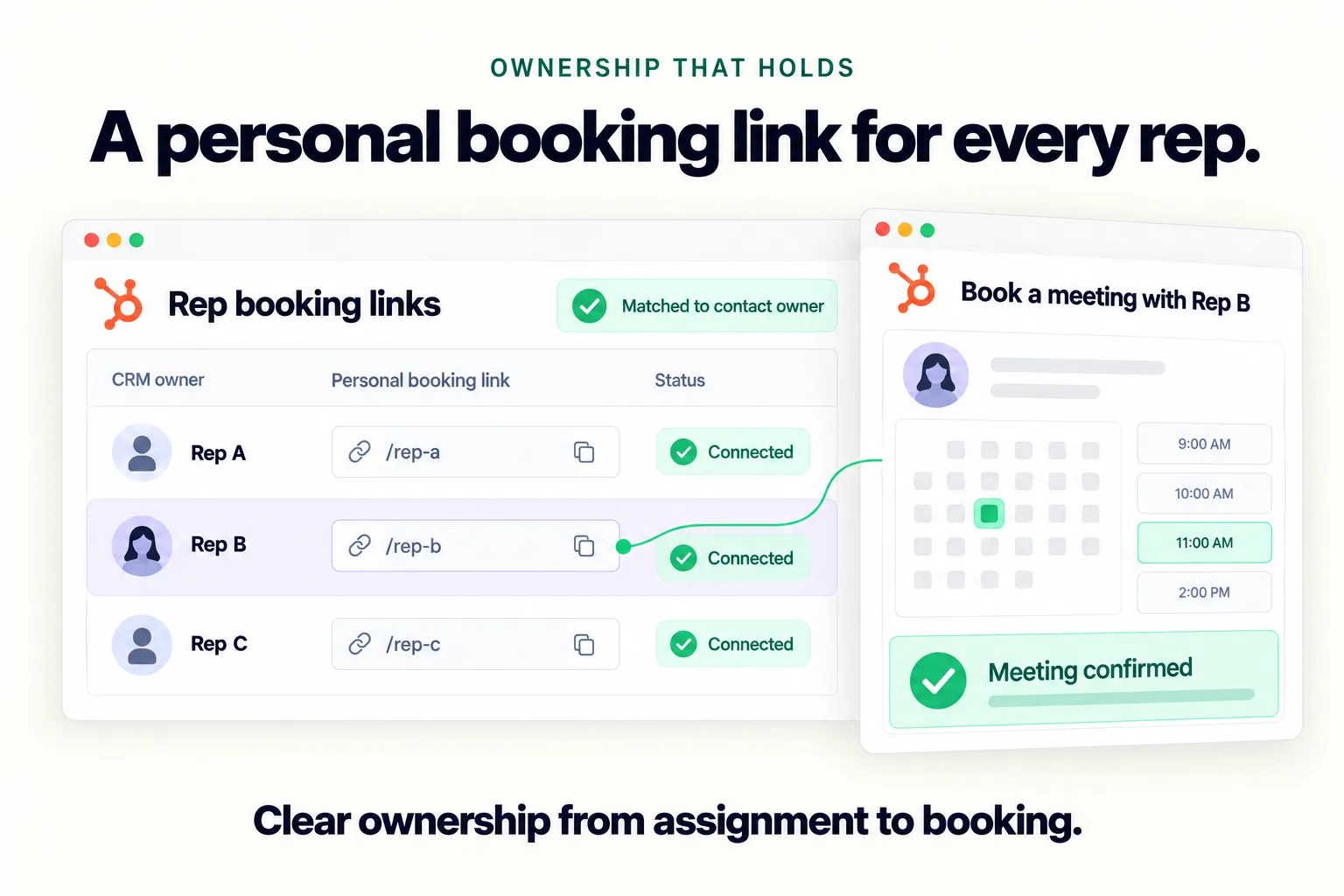
Shared booking links rewarded whichever rep clicked first. That rewarded speed over ownership and generated weekly escalations. We replaced the shared links with personal booking links per rep, tied to their HubSpot ownership.
The rep-on-rep conflicts, which had been eating sales leadership's time for years, disappeared within two weeks.
03
Rebuilt channel attribution from scratch.
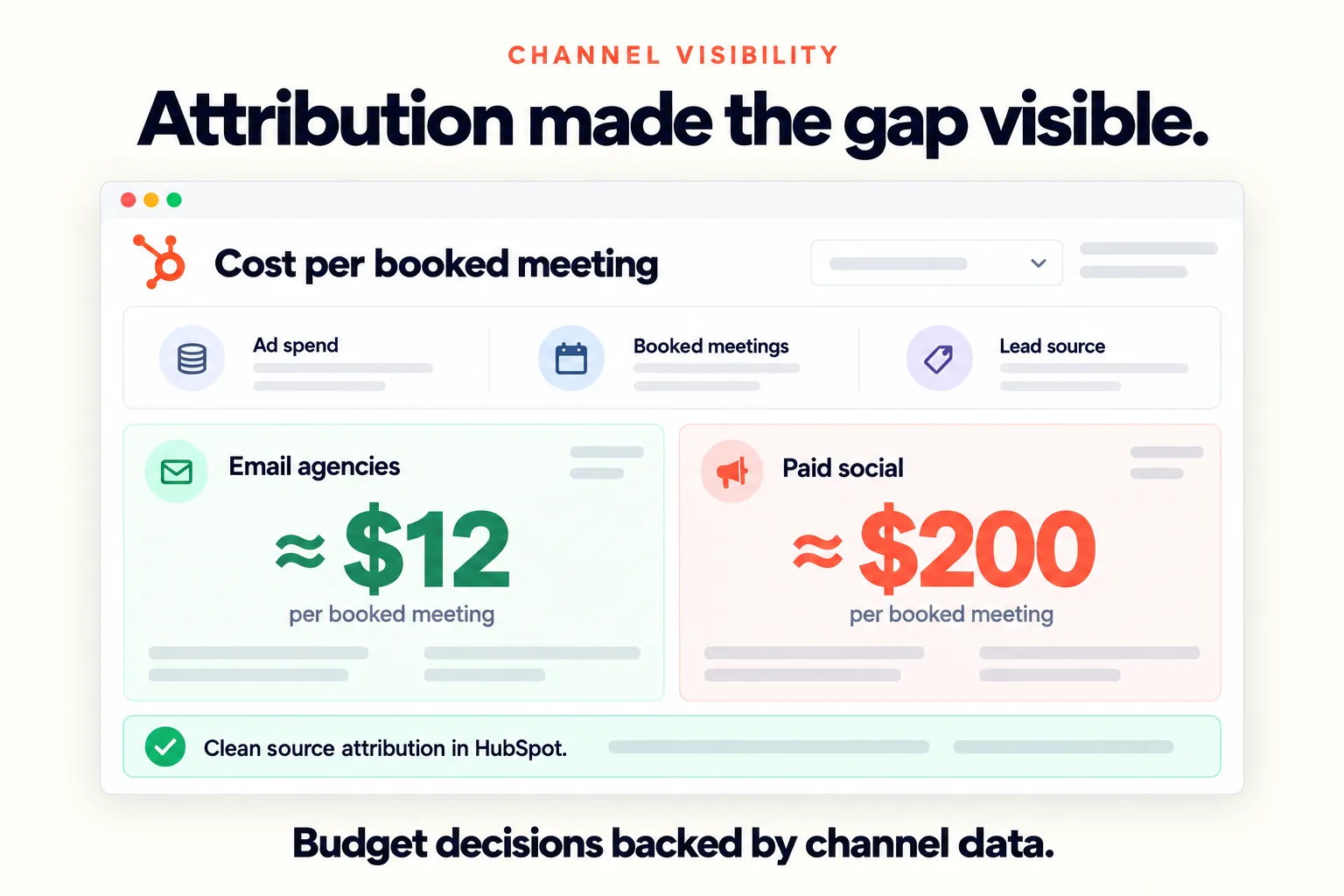
Once every lead source fed the same routing workflow with clean source attribution, we could finally calculate cost-per-meeting by channel. A reporting model joined ad spend against booked meetings and layered in no-show rates.
The numbers surprised everyone. Email agencies: meetings at roughly $10-12 with a 20% no-show rate. Paid social: meetings at roughly $200 with a 50% no-show rate. A 20x cost-per-meeting gap that had been invisible for years.
05 — The result
What
Changed.
The 20x gap rewrote the ad conversation overnight. Budget shifted toward email agency scaling. The AI SDR pilot launched against a 1,200-lead backlog. And for the first time, leadership had a revenue plan they could defend with data.
Cost-per-meeting visibility
None
$12 email vs. $200 paid (20x gap)
Workflow architecture
16 workflows per source
2 master workflows
Lead distribution
Shared links, rep conflicts
Personal booking links, zero conflict
Revenue planning
Aspirational $5M target
$5M plan tied to real ACV & close rates
No-show recovery
Manual, ~70% lost
5-day automated SMS/email sequence
06 — Sound familiar?
If three hit home, we should talk.
Your CRM has been "temporarily" accumulating workarounds for more than three years.
You have multiple workflows that do essentially the same thing for different lead sources.
Your reps don't fully trust the CRM and keep their own side-of-desk tracking.
You can't answer "what does a meeting actually cost us?" by channel.
Someone has floated a full CRM migration as the "only" solution.
20 minutes. No deck. We'll tell you whether we can help or not.
07 — FAQ
Questions we get asked.
How long did the CRM workflow consolidation take?
Roughly 8 weeks end-to-end. The first master workflow replaced the two highest-volume lead-source stacks in week 3. Subsequent phases migrated the remaining sources. Reps were using the new system by week 3 without training beyond a 15-minute Loom walkthrough, because the new experience was simpler, not more complex.
Did Terraboost have to migrate off HubSpot?
No. The entire consolidation happened inside HubSpot. A migration to a different CRM would have been a multi-quarter, six-figure project that solved nothing. The problem was workflow architecture, not the underlying platform.
How do you collapse 16 workflows into 2 without breaking existing processes?
By identifying the common shape across all 16. Most lead-source-specific workflows replicate the same routing and follow-up logic with minor conditional branches. We consolidated the shared logic into two master workflows and handled source-specific behavior through conditional properties rather than separate workflow trees.
How did the 20x cost-per-meeting gap get surfaced?
Once every lead source fed a consistent routing workflow with clean source attribution, we could finally calculate cost-per-meeting by channel. Email agencies were generating meetings at roughly $10-12 with a 20% no-show rate. Paid social was generating meetings at roughly $200 with a 50% no-show rate. The gap was there the whole time. It was just invisible under the workflow sprawl.
Did reps push back on the booking link change?
The reps who had been quietly losing leads to more aggressive colleagues were the biggest advocates. Once personal booking links were live, rep-on-rep lead conflicts disappeared entirely. Adoption wasn't enforced. It was requested.
08 — Next step
Want
To Know
What Your
Meetings
Actually Cost?
We take on a small number of clients at a time so we can actually do the work. If your CRM has accumulated a decade of workarounds, 20 minutes will tell us both if we're a fit.
20 minutes. No deck. Straight talk about whether we can help.